Dictating the Agenda: Authoritarians go on the Global Offensive
Globalization was supposed to spread democracy. Instead, authoritarianism is back.
At the height of globalization in the 1990s and 2000s, scholars and Western policymakers shared a confident assumption: that expanding global markets and new technologies would naturally diffuse liberal values such as freedom of expression, expert independence, and civil society’s ability to mobilize across borders. With the United States as the world's unchallenged superpower, it seemed inevitable that American soft power and robust transnational networks would propagate democratic norms and values worldwide, even if US foreign policy did not always uphold those same standards in practice.
However, world politics is moving in a sharply different direction. As Alexander Dukalskis and I explore in our new book Dictating the Agenda: The Authoritarian Resurgence in World Politics, authoritarianism has returned with renewed self-confidence in global affairs. China has risen to become a developmental superpower and global governance agenda setter, while cracking down on the transnational actors that previously pressured the country, such as during the run-up to its hosting of the 2008 Beijing Summer Olympics. Russia has launched a costly war against Ukraine under a tightening dictatorship, absorbing rounds of western sanctions and boycotts, while rallying much of the Global South against the US-led international order. Add the growing investment power of Saudi Arabia and other Gulf monarchies, Turkey's decades-long slide into autocracy, and the current US administration's open embrace of illiberalism, and the resurgent tide of global authoritarianism represents a defining geopolitical reality of our time.
Rewiring the Global Media Landscape
Nowhere is this transformation more visible than in the changing sources of global media coverage and the erosion of norms protecting independent journalism. As globally influential outlets such as CNN, Washington Post and the BBC continue to reduce international coverage, authoritarian states are dramatically increasing their global footprint. Chinese state media now claims over 180 overseas outlets in virtually every corner of the world.
Perhaps more significant than these overseas bureaus are the content-sharing agreements reached between autocratic news wire services and local media partners. Traditionally, news outlets worldwide obtained international coverage from Western-owned wire services such as the Associated Press or Reuters. With subscription costs mounting and local media budgets tight, Russia and China offer their news feeds far cheaper or even for free, thereby ensuring that Beijing and Moscow's perspectives and hostility to liberal democracy inform global news coverage through their partnerships. Our research uncovered nearly 100 Russian newswire content-sharing agreements worldwide and 300 Chinese agreements — a dramatic shift in who shapes the world's information landscape.
This expansion of authoritarian media influence occurs alongside mounting threats to the independence of foreign journalists. While watchdog organizations like the Committee to Protect Journalists document direct attacks against reporters, we wanted to explore how authoritarian countries employ administrative means to systematically violate the once-held norm of allowing foreign correspondents to work relatively unfettered.
Our research on administrative actions taken against foreign journalists by authoritarian states between 1999 and 2023 yielded 1,020 cases of press restrictions in our Authoritarian Restrictions on Foreign Journalists (ARFJ) Data Set. These include 429 cases of denied visas or accreditation and 403 cases of expulsions or deportations. The most frequent offenders were Russia, Azerbaijan, China, Turkey, and Myanmar. These incidents are increasing in frequency across all types of authoritarian regimes, suggesting a deliberate strategy to control domestic narrative while projecting their own version of events globally.
From Civil Society to Regime Threats
Authoritarians have also learned from one another. After the so-called "Color Revolutions" of the 2000s across post-Soviet countries, authoritarian regimes treated independent civil society and NGOs not as democratic activists but as security threats and political tools of the West. Russia's stigmatization of organizations receiving foreign funding as "foreign agents" and then banning them as “undesirable organizations" spread throughout the post-Soviet region and beyond. These tactics have proven so successful that they have now spread to liberal democracies themselves.
Despite these troubling trends, we are not entirely pessimistic. Nearly every arena of social and political life is now contested at all level — local, national, regional, and global. Democracies can still shape these spaces, but only if they act together . The current US-EU fight over social media regulation threatens to erode coordination over shared standards for platform accountability just as authoritarian influence in the global digital sphere intensifies.
Those who believe in liberal values need to recognize that there is no automatic process or technological fix for ensuring openness and guaranteeing political rights. Neither expanding global markets, nor the international media spotlight associated with a mega-event nor a new technology — whether the internet or AI — will magically democratize governance or guarantee freedom of expression. Defending liberal democratic values requires increased investment in independent journalism, sustained engagement to influence international institutions, and building stronger coalitions among like-minded democracies.
For more on the book, see the roundtable published in Asia Policy here.
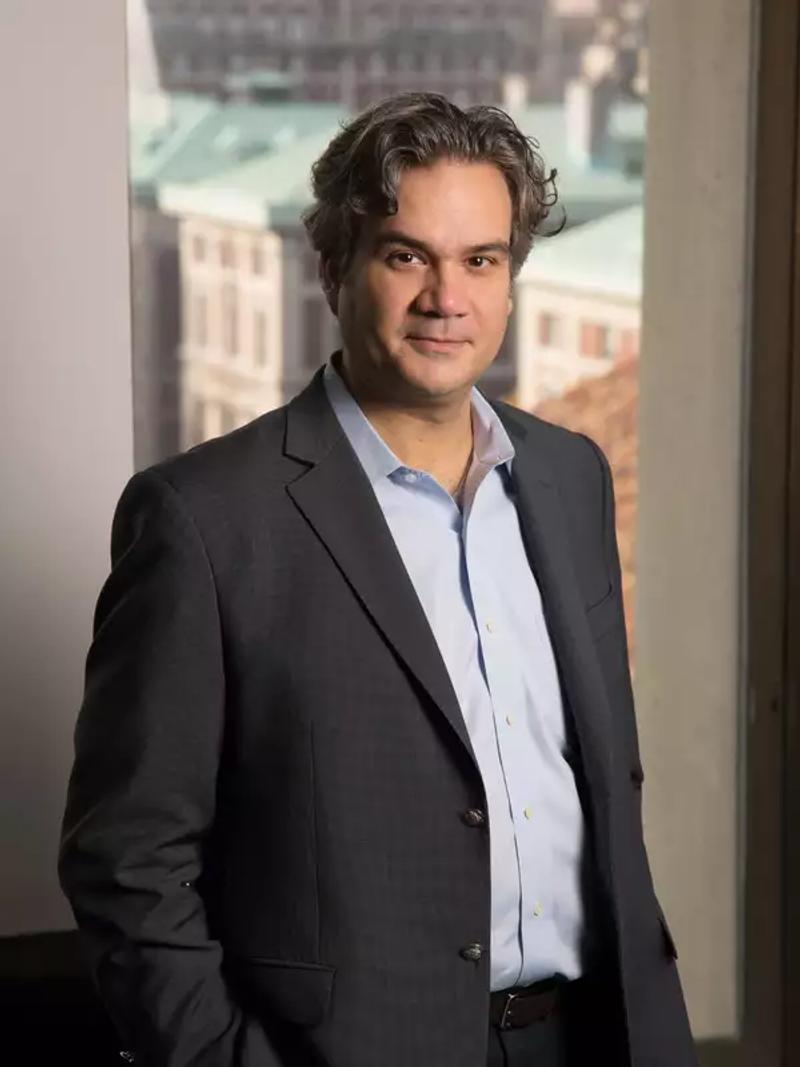
Alexander Cooley is the Claire Tow Professor of Political Science at Barnard College and the Chair of the Faculty Advisory Committee of the Columbia Global Center Athens. From 2015-21 he served as the 15th Director of Columbia University's Harriman Institute for the Study of Russia, Eurasia and Eastern Europe and from 2022-25 as the Vice Provost for Research and Academic Centers at Barnard.
