Scholarly Insights: Movement, Survival, and the World We Closed Off
Emerging Scholar Gerawork Teferra Gizaw traces the history of human movement to ask why today's world has closed its doors to people moving to survive.
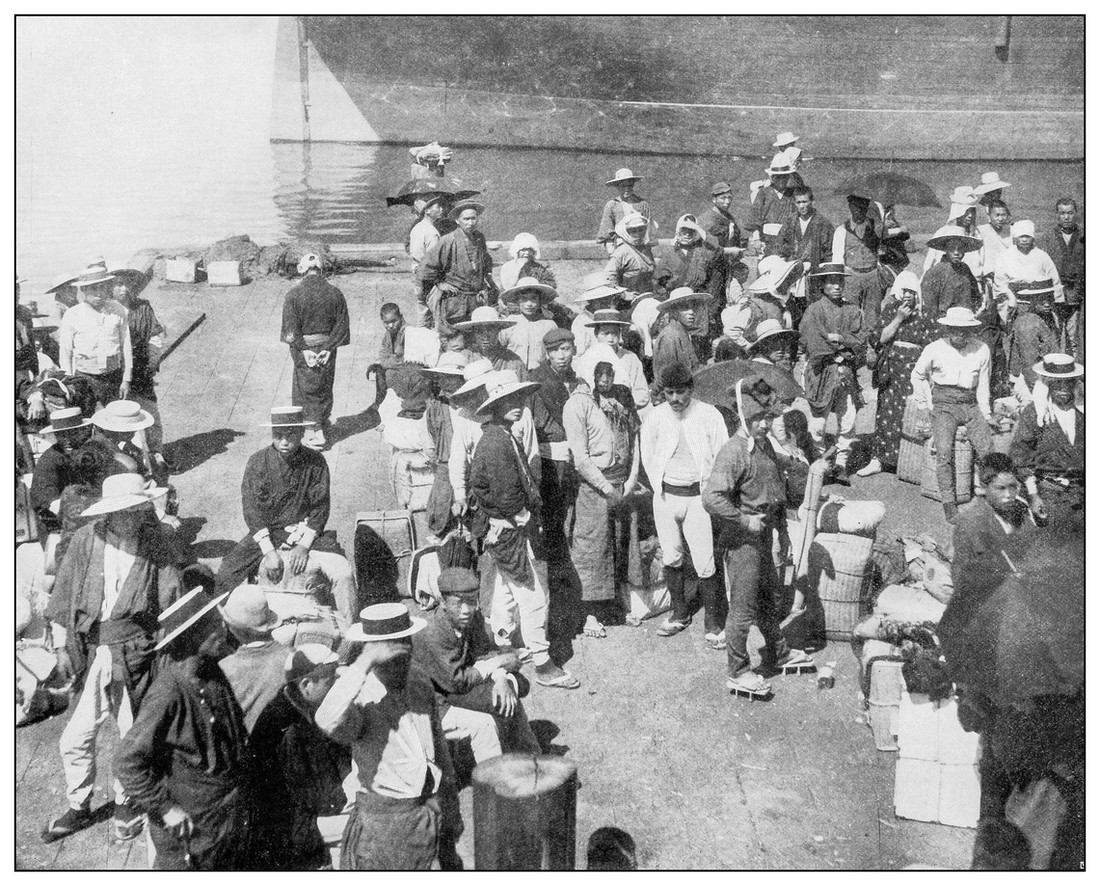
Today, more than 110 million people worldwide are displaced — forced to move elsewhere. Yet, in reality, they move nowhere. While early mankind was characterized with this primordial form of movement, the response from many states and governments to such movement today has become isolation, detention, and deportation.
As a person who has lived in a refugee camp and experienced “inbetweeness” within communities, states, and global institutions, such responses puzzle me. Supported by the Emerging Scholars Fellowship Program at Columbia Global, I studied the history of human movement and strangers’ hospitality to better understand the modern-day response. Based on my historical review, I would argue that such a response not only contradicts natural law (the evolved human instinct to move and survive) and human norms but it also indicates a fundamental breakdown in societal relations.
From moving to settling
A few million years ago, because of the need to efficiently forage and survive, our primate hunter-gatherers evolved into medium-sized bipeds with flexible spines, larger brains, and advanced cognitive skills, leaving most other primates behind to extinction. We call this early ancestor the “Mobile Man”, as movement and exploration gave them the capacity to move, adapt, and thrive across environments. This new ability to travel from place to place unlocked a reciprocal form of hospitality between humans which facilitated interactions between communities and dispersed the species all over the planet.
Then, around 10,000 BCE, the Mobile Man disrupted the natural order by introducing territoriality and land ownership, which radically changed the meaning and attachment to places. The Mobile Man became the “Settler Man.” Early urban cities emerged and the relationship of societies and their populations led to the creation of complex hierarchical societies and borders. For the first time in human history, movement started to be regulated by city-states, kingdoms, and then empires.
In the last two millennia, the cycle of expansion, integration, and fragmentation of societies has strengthened social identities and territoriality. Boundaries have been perfected, and hierarchies emerged. At the same time, the forms of movement diversified to include trade and investment, diplomacy, exploration, tourism, colonialization, pilgrimage, and more. The primordial forms of mobility that humans evolved to survive started to be overshadowed by the needs of elite, powerful groups.
A world closed off
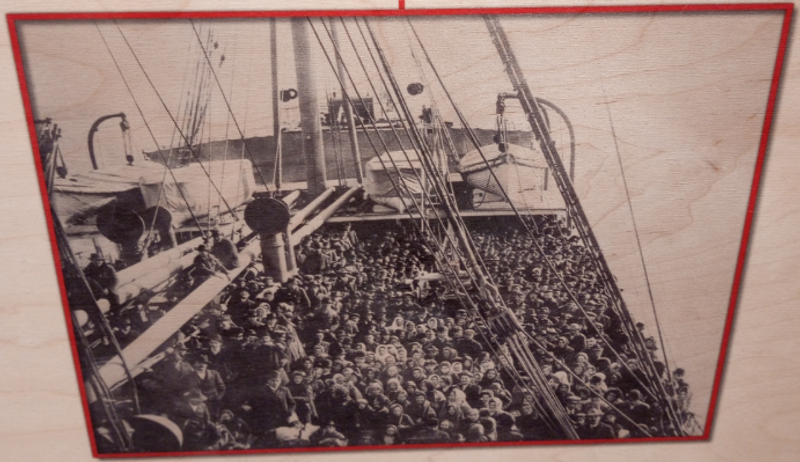
Around 1850, the world's human population surpassed one billion, and colonization intensified in the Americas and Africa. This explosion in population growth and government control signaled the closure of frontiers, and shifted man’s focus to expanding efficiency through technology and mass production. Consequently, in the modern era, technology got the upper-hand over nature and transformed mankind once more into a “Tech Man.” Mass production and enhanced movements of goods and services reduced the need for human movement and led the population to grow exponentially. In the last two centuries alone, the population has grown nearly sevenfold, surpassing eight billion.
However, in today’s post-modern era, the ancient practices of reciprocal cooperation that provided safety and space for those on-the-move — building sanctuaries for strangers, welcoming those in need, integrating newcomers rather than exploiting them — are treated as old-fashioned. Similarly, philosophical traditions that consider hospitality to strangers as an ultimate sign of humanness have gradually lost importance in the current era.
In practice, modern legal frameworks reward economic migrants and skilled workers while offering little to those moving simply to survive. What makes this especially striking is the breadth of the consensus: state, religious, and academic institutions — the bodies that have historically served as checks on power — now largely operate for the benefit of privileged groups instead of challenging unfair systems and misuse of powers.
Mobility, which was once a survival tool, is now effectively instrumentalized for politico-economic reasons. Today, it largely serves the interests of powerful nations and the local elites who sustain them, leaving those who move simply to survive with nowhere to go on a planet that has been effectively carved up and closed off.
The few who navigated that closure and reached somewhere safe are now characterized as threats, pressured by those who ignored history and assumed territorial entitlement. The crisis this has created is vast — more than 110 million people around the world are living in exodus, liminal places, or detention centers. This present reality should serve as a reminder of the lessons we have abandoned, our deviations from natural law, and the breakdown of the evolved human duty to care for those in need.
About the Author
Gerawork Teferra Gizaw is a researcher and educator originally from Ethiopia who lives and works in the Kakuma refugee camp in Kenya. He was a 2024–25 residential fellow in the Emerging Scholars Program at Columbia Global Center Nairobi, which supports scholars whose academic work has been disrupted by displacement. During his fellowship, he researched the history of human mobility and hospitality, with a focus on refugee hospitality in Kenya.
Gizaw holds a master's degree in development economics, a bachelor's degree in conservation, and diplomas in law and business information systems. He is an honorary research fellow in the Faculty of Humanities, Arts, and Social Sciences at the University of Exeter and has collected oral histories for Princeton University's Global History Lab. In 2024, he received the Voltaire Prize for his contributions to social dialogue, international understanding, and tolerance. He has also worked as an academic coach and learning facilitator for Jesuit Worldwide Learning's Sustainable Development Program in Kakuma.
His research spans oral history, refugee life, education, hope, and hospitality, and he is drawn to work that crosses disciplinary lines to examine human relationships, institutions, and mobility.